
inklings
essays, stories, scripts, research, zines, books

Vivienne’s writing evolves in parallel with her art projects. Her essays reflect on the ideas behind her ongoing series: research trips, the craftspeople who make her materials, conversations with scientists and philosophers, and the small changes she observes in the 72 Japanese microseasons. She also writes the scripts for her environmental films.
In 2017, Vivienne founded Fleet and Rhine Publications, What the Silence Grew. Its zines, and the books in development, take her themes further, looking at seeds, plants, edible flowers, future foods and the conditions that allow something to thrive.
Together, the essays, scripts and publications offer another way into her work, revealing what happens before, after and around each ongoing series through painting, sculpture, film, workshops and the education programmes.

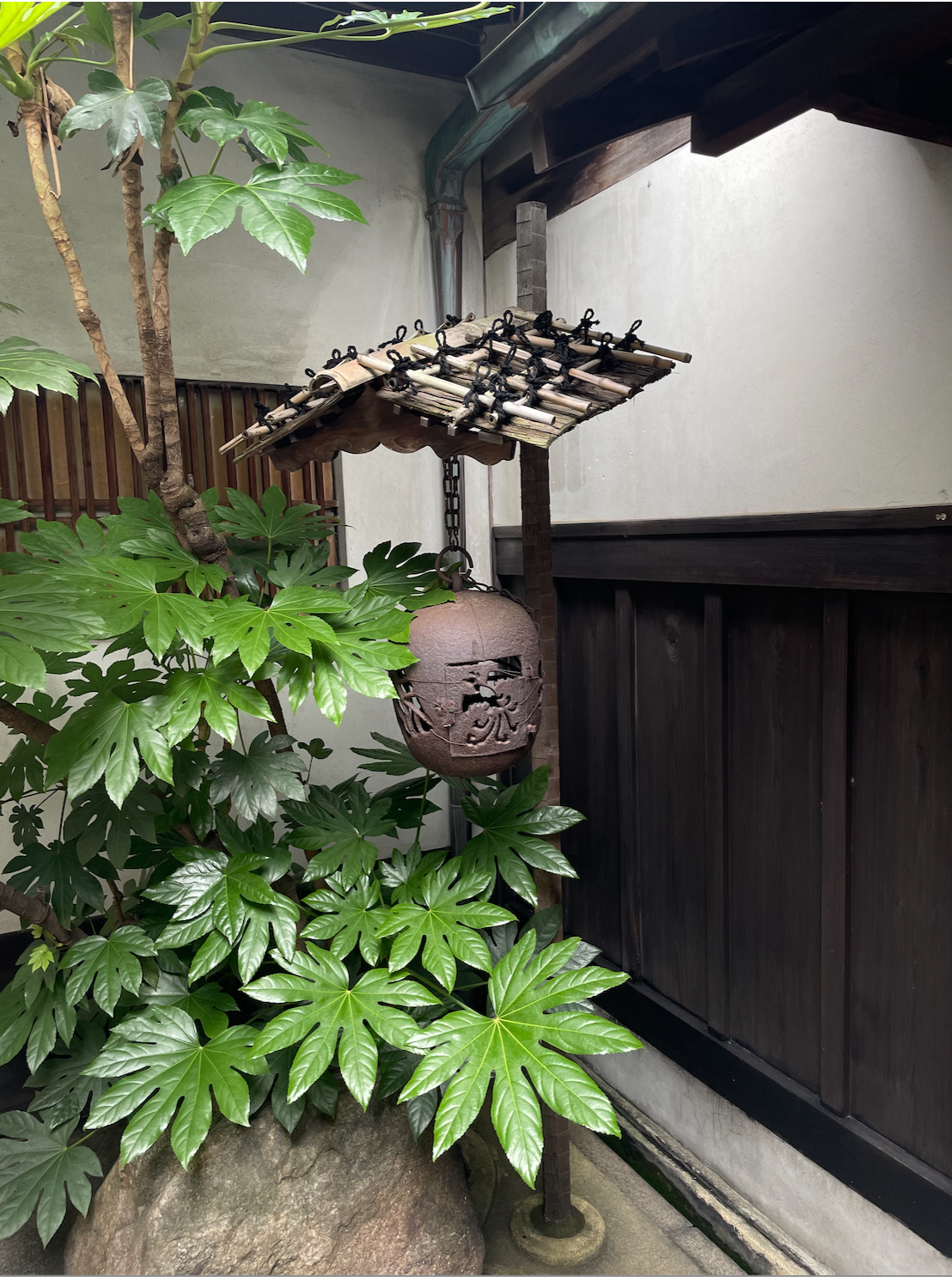
Collecting Natural Art Materials: The Ink Makers of Nara
19 November 2026 - Studio Notes · Research · Nara, Japan · 2024
My art practice is shaped by my connection to the craftspeople behind my materials. How my work is made matters as much as its concepts and visualisations. In my studio process, I pay great attention to using sustainable, natural materials – from the paper to the ink and pigments, to the frames. I have met most of the makers whose materials I use.
In 2024 I went on my second research trip to Japan. I wanted to explore the ancient and often endangered sumi workshops where these traditions have been passed down for centuries. Nara was Japan’s first permanent capital and today it is a UNESCO World Heritage Site. It is known for its ancient temples, shrines and sacred forest. Above the city is the forest of Mount Mikasa, where the gods are said to live. Legend tells that a deity arrived there riding a white deer, and the deer that roam freely through Nara Park are still seen as messengers of the gods. Nara is also the home of Japan’s ink makers, where most of the country’s sumi is still made.
The ink makers
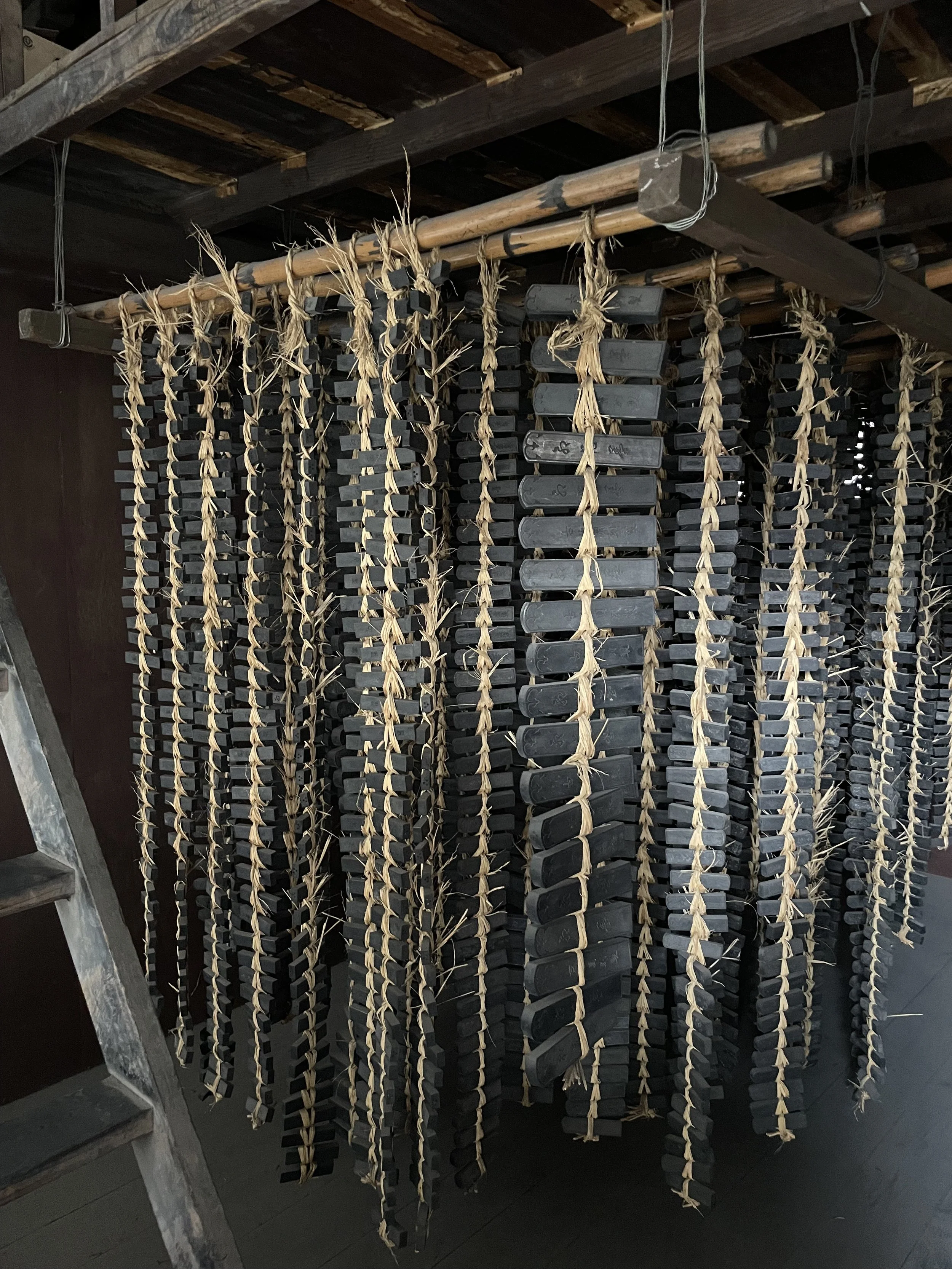
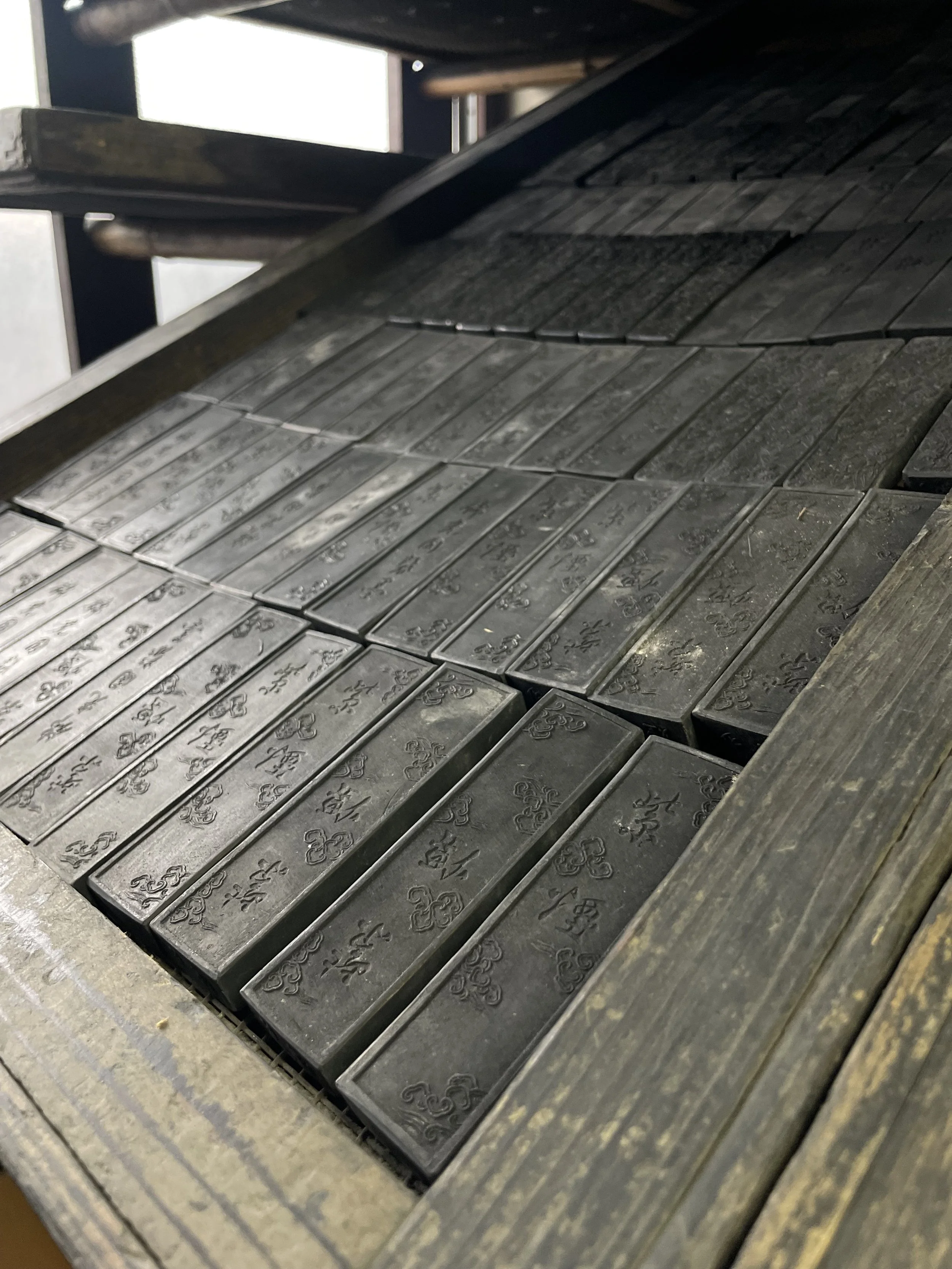
In Nara, sumi ink has been handcrafted for over 400 years. By the middle of the Edo period, around forty ink shops lined the streets of the old town. The ink sticks are use for calligraphy (shodo) and ink painting (sumi-e). I visited two of the workshops that continue this tradition today, Kobaien and Kinkoen.
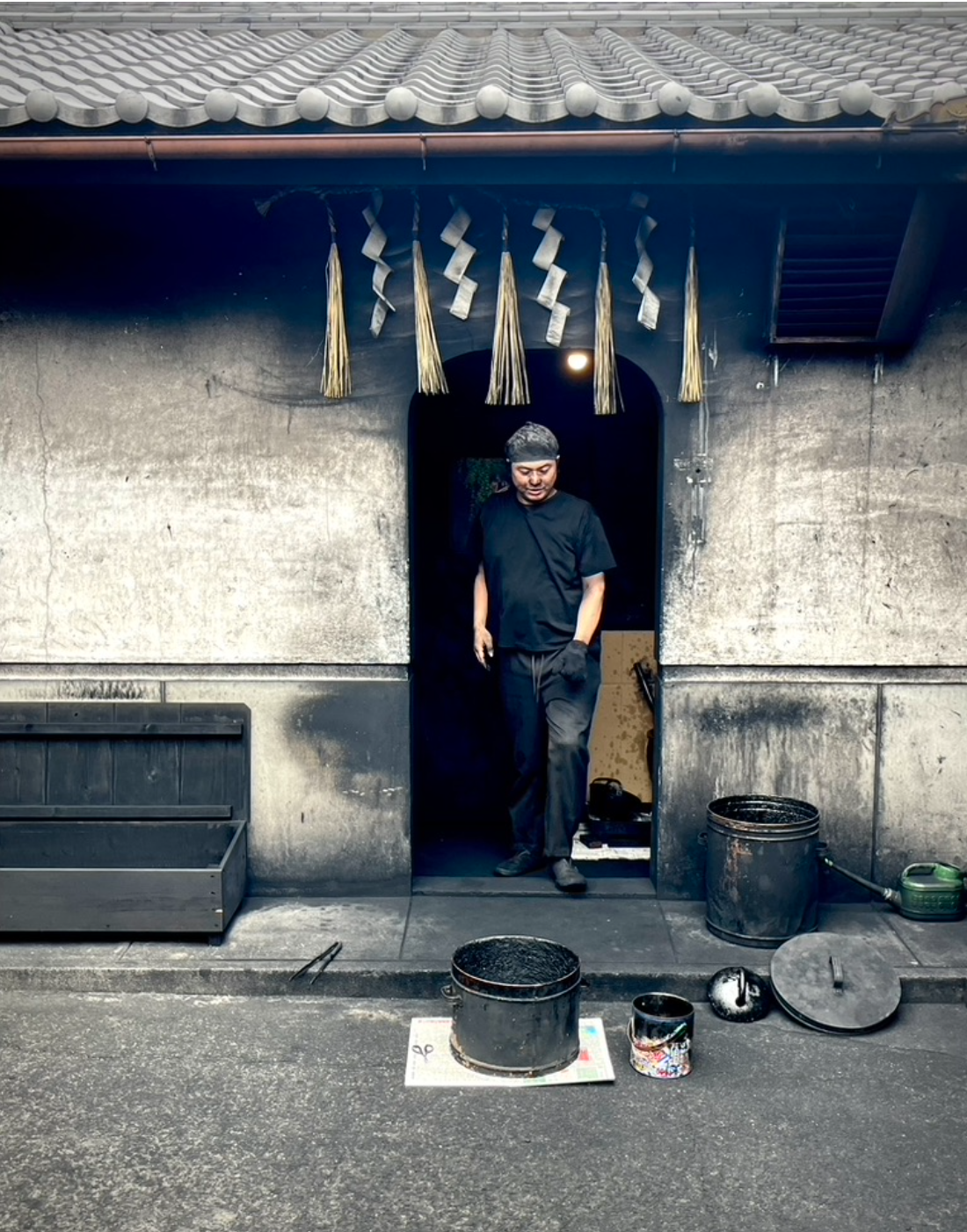
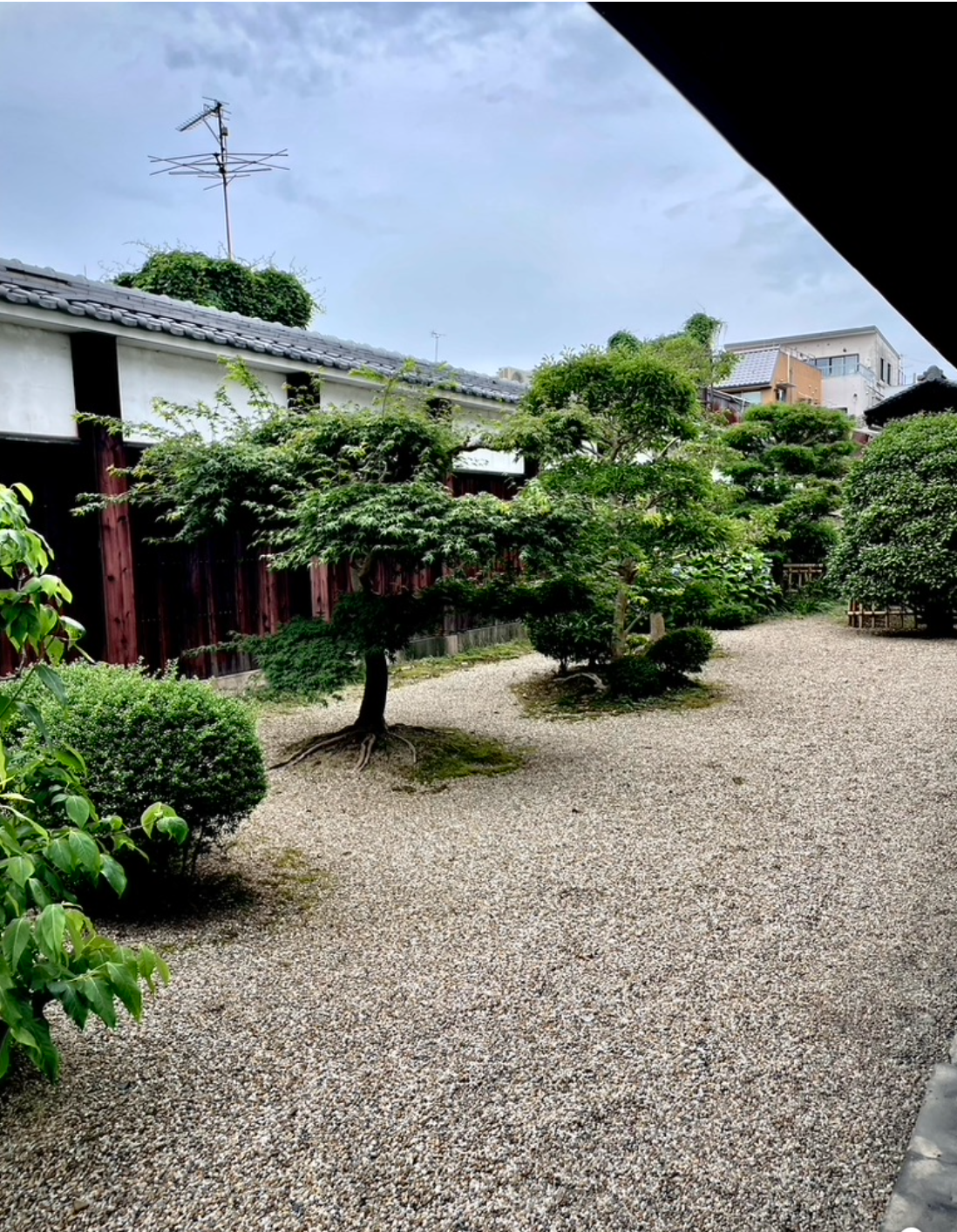
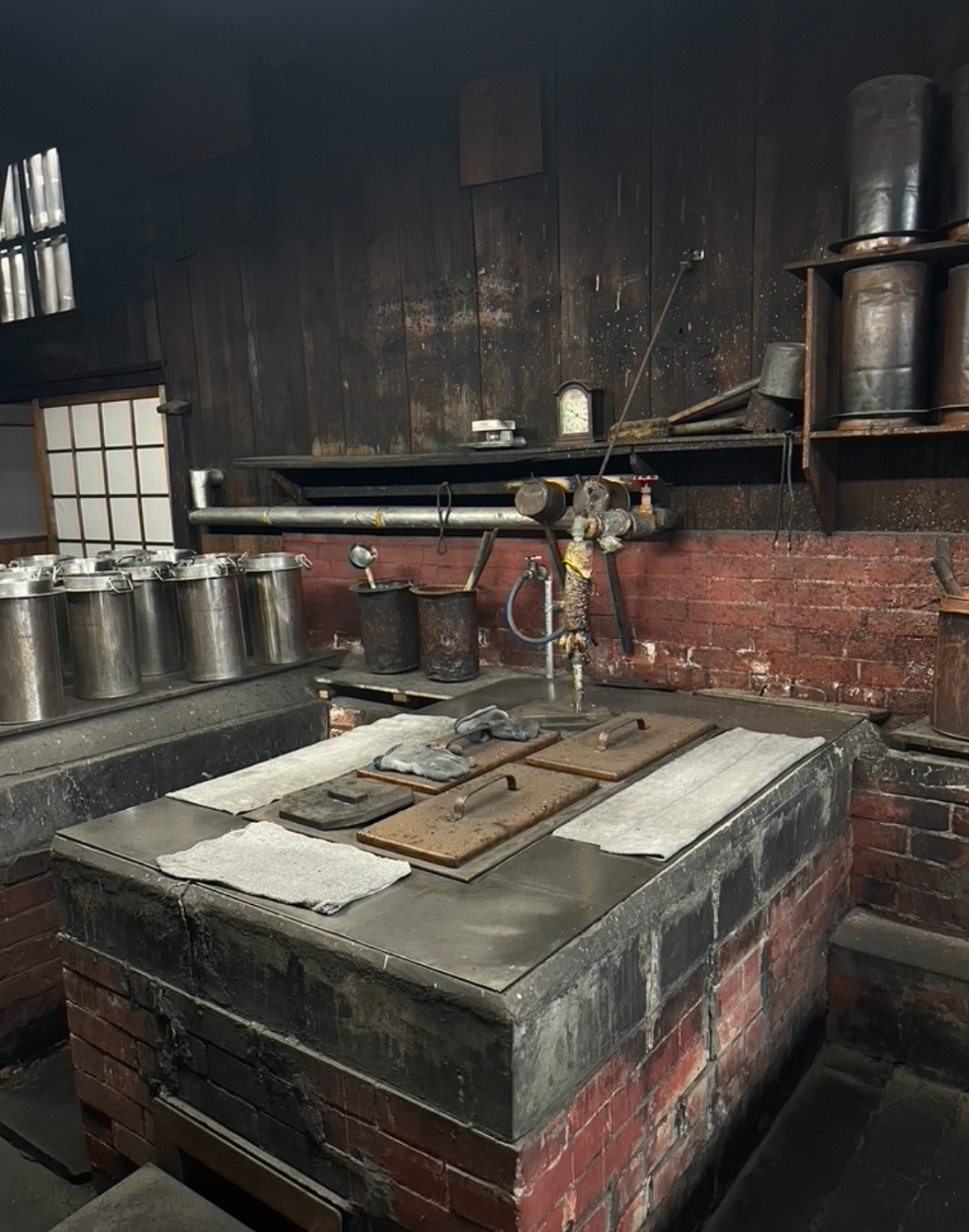
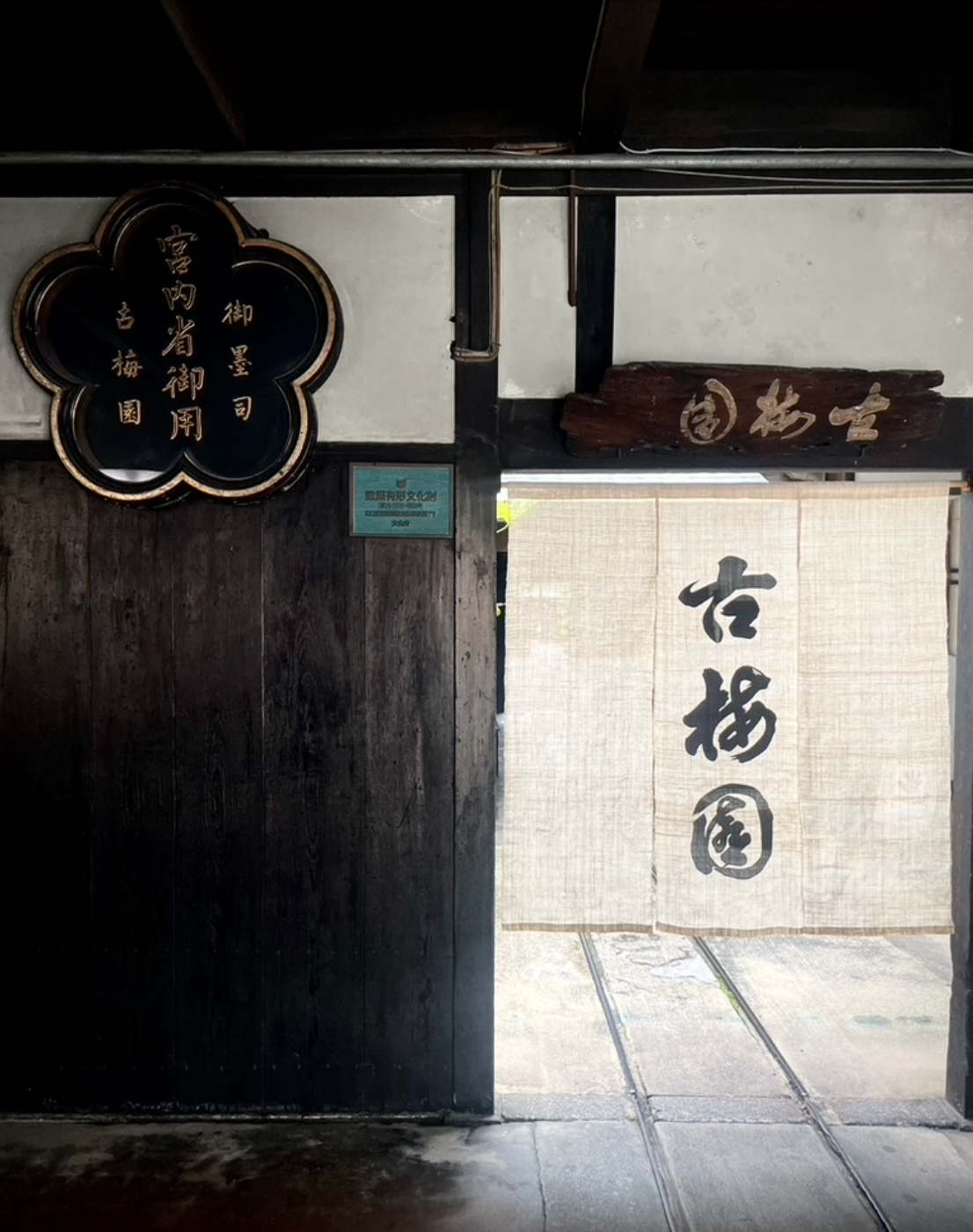
Kobaien is the oldest. It was founded in 1577 by Dochin Matsui, and the craft has been passed down through sixteen generations of the family. It is now led by its first female head – remarkable in a craft that has traditionally been passed from father to son. We had a funny conversation – about ink, sumi-e painting, exhibiting in Tokyo, art, travel, shops, biscuits and life in the UK. Kobaien still makes its own soot in the traditional Nara way, burning plant oils in dark rooms and gathering the fine soot by hand. A beautiful old plum tree still grows in the courtyard at the heart of the workshop. I loved browsing their shop at the end of my visit. Trying the vast variety of ink shades, and experiencing that black is not just black, was precious. Ink sticks get better as they age. It was lovely to see that the year is printed on each ink and box, and it was amazing to buy a rare old one. The novelist Natsume Sōseki wrote a haiku about the fragrance of the ink that is scenting the air at Kobaien:
Sumi no ka ya
Nara no miyako no
Kōbaien
The scent of ink —
in the old capital of Nara,
Kobaien.
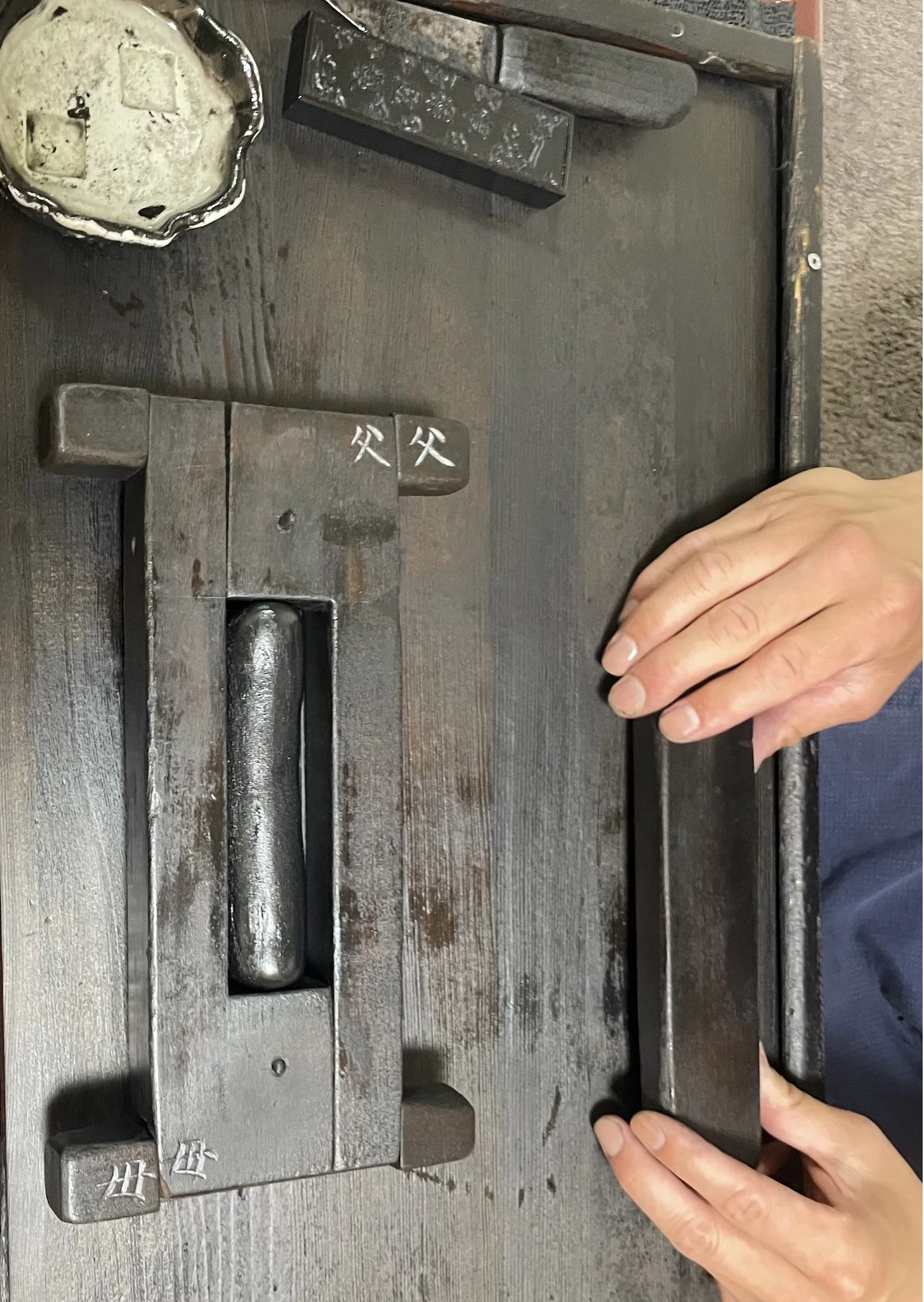
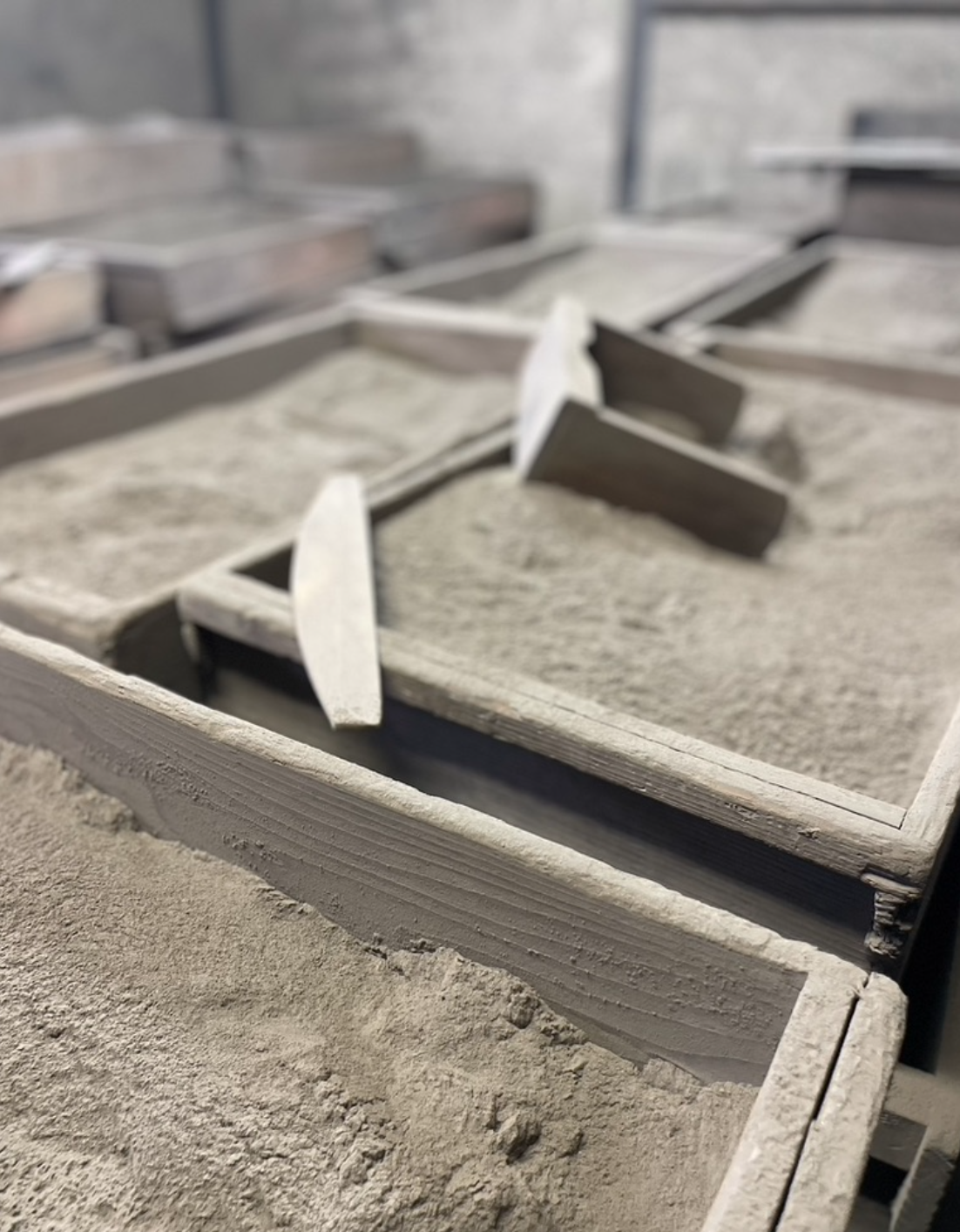
Kinkoen is a family workshop in Naramachi, the historic old town, founded about 150 years ago, using an ink making tradition that goes back over a thousand years. Bokuen Nagano is the sixth-generation ink maker, and his son Nagano is the seventh. I loved watching him make an ink stick – how fast his hands moved, from weighing to kneading to pressing it into the mould. I also learned about the mould makers themselves, and that their craft is endangered too. Each ink stick is made by hand from soot - animal glue and spices. The essential oils from the spices smell wonderful and are apparently also an insect repellent. Ink making is seasonal. Because the glue does not set in warm weather, ink is only made from autumn to spring. The family wants Kinkoen to be a place where people can gather and talk about ink, and to share Nara’s ink culture. Nagano-san takes lot of initiative to make his ink sticks accessible to younger generations and to people around the world. It was humbling to meet the shokunin and to witness this meticulous process, stretching back millennia. I loved buying Kinkoen’s ink sticks decorated with gold leaf, one made out of the rare pine soot and one moulded with a Nara deer.
Back in the studio
Each time I bring back more sustainable art materials, I find that my own art changes. It grows in meaning. When I grind the sumi ink in my studio, the essential oils are released. It is my meditation before I start painting; it calms my mind, improves my concentration and gives me focus. This ritual brings me stillness, where my research transforms into capturing the essence of a plant or an element. And in my mind I can go back to my research journey: seeing the landscape, meeting and connecting with the craftspeople and hearing their stories, and then experiencing the fire, the air and the people who shape the ink, with the patience, dedication, pride and passion that go into its making.
Most of all, I feel a great sense of connection. The materials, with their natural origins and their makers’ spirit, go into my work, which is about nature itself.
Working with the shokunin shows me that my art is not just about what I create. It is a deeper story of how we relate to people and the earth. In my work, I paint endangered nature with endangered craft.
Recently, someone wrote to me about my paintings:
“They radiate a great calm and poetry, and at the same time have a remarkable depth. I had the feeling that they do not reveal themselves to the viewer all at once, but unfold their full effect only over time.”
The materials help me to evoke this, and that is why they matter so much to me.